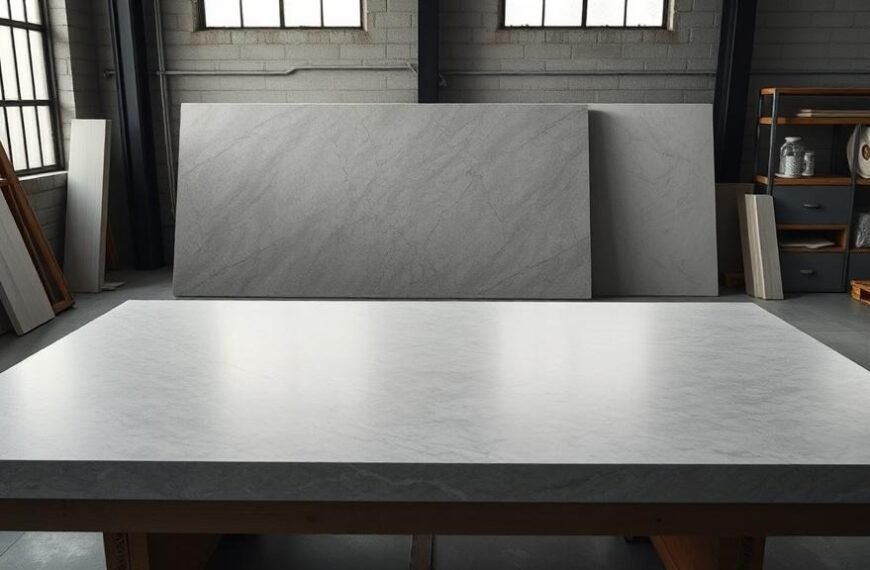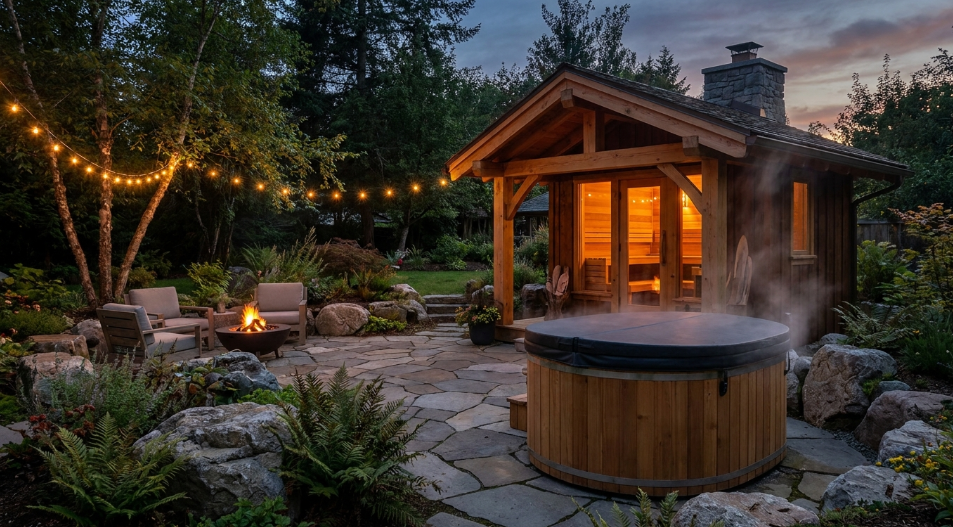
A sauna heater needs a listed, non-combustible floor pad directly underneath it regardless of what the rest of the room or deck is built from, whether that is tile over plywood indoors, a concrete paver set into a gravel base outdoors, or a protective mat rated for the heater’s surface temperature on top of composite decking. The surrounding floor matters for the room as a whole, but the heater’s own footprint has a narrower, stricter requirement that most installers handle separately from the rest of the flooring plan.
Why does the heater need its own pad at all?
The base of a running heater gets hot enough to scorch or discolor bare wood over time, even wood that is otherwise fine as sauna bench or wall material a few inches away where airflow keeps temperatures lower. Manufacturers list a minimum floor protection requirement in the installation manual, typically a non-combustible material rated for direct contact with the heater’s base temperature. Skipping this step because the surrounding floor “looks fine” is one of the more common installation shortcuts that shows up as scorching or warping within the first year of regular use.
What works indoors: tile, concrete board, or a listed pad?
Ceramic or porcelain tile over cement board is a standard indoor solution, giving a durable, easy to clean, non-combustible surface under the heater and often extending a few inches beyond its footprint to cover the clearance zone as well. A pre-made listed floor protector, sold specifically for sauna and wood stove installations, is a simpler option for retrofitting an existing wood or laminate floor without pulling it up, since it sits on top rather than requiring demolition. Either approach works; the deciding factor is usually whether the room is being built from scratch, which favors tile, or retrofitted into an existing space, which favors a listed pad.
What about a composite deck for an outdoor cabin?
Composite decking handles the surrounding traffic areas of an outdoor sauna cabin well, resisting moisture and rot better than untreated wood, but it is not rated on its own as a floor protector directly under the heater. Outdoor cabin installs typically place a dedicated pad, tile section, or manufacturer-approved protective mat at the heater’s exact footprint even when the rest of the deck is composite, treating the heater location as its own small zone within the larger deck rather than assuming the deck material itself is sufficient protection.
Does gravel work as a base, or does it need something on top?
A compacted gravel base is a common and effective foundation for an outdoor sauna cabin, providing drainage that keeps water from pooling under the structure, which matters for the wood sill and floor framing above it. For the heater specifically, most installers set a paver or small concrete pad directly on top of the compacted gravel at the heater’s footprint, since loose gravel alone does not give a level, stable, non-combustible surface for the heater’s feet to sit on securely. Gravel handles drainage and structural support well; it is not a substitute for the hard, flat surface the heater itself needs.
Does drainage matter for the pad location, not just the surrounding floor?
Water on the stones and condensation off bathers both end up on the floor eventually, and the heater’s pad location is not exempt from that moisture even though it is not directly under the ladle. Indoors, a tile or listed pad with a slight slope toward a floor drain keeps standing water away from the heater’s base and the surrounding wood over time. Outdoors, the gravel base beneath the pad handles most of the drainage work by letting water percolate down rather than pooling, but the pad or paver surface itself should still sit level and slightly proud of the surrounding gravel so runoff moves away from the heater rather than collecting against its feet during a heavy rain or after a session with a lot of water on the stones.
Indoor versus outdoor: does the pad requirement change?
The core rule, a non-combustible surface at the heater’s footprint plus clearance, applies whether the sauna is a converted indoor room or a standalone outdoor cabin, but the surrounding conditions differ enough to matter. An indoor install is protected from rain and temperature swings, so a tile or listed pad over cement board rarely needs anything beyond what is already described. An outdoor cabin deals with freeze-thaw cycles in colder climates, which can shift a poorly set paver over a season or two, so installers in those regions often set the pad on a slightly deeper gravel or crushed stone base than they would in a milder climate, giving it more room to handle ground movement without cracking or tilting out of level.
How much pad or clearance space does the heater actually need?
Clearance requirements are specific to each heater model and listed in its installation manual, typically a few inches on the sides and somewhat more at the back where the element housing runs hottest. The pad, tile section, or protective mat under the heater should extend at least as far as that clearance distance on every open side, not just cover the heater’s physical footprint. Guessing at this distance rather than checking the manual is one of the more common reasons a heater ends up positioned too close to a bench or wall after the room is otherwise finished.
the team at SweatDecks can walk through pad and clearance specs for a specific heater model before installation, which is useful for anyone finalizing a deck or gravel base plan and wanting to confirm the heater footprint requirements before pouring concrete or setting pavers.
Frequently Asked Questions
Can a sauna heater sit directly on a wood floor?
Not without a non-combustible pad underneath it. Manufacturers specify a listed floor protector, tile, or concrete board beneath the heater regardless of what the surrounding floor is made of, since the heater base runs hot enough to scorch bare wood over time.
Is a composite deck safe for an outdoor sauna cabin?
Composite decking can work as the surrounding surface, but the heater itself still needs its own non-combustible pad or protective mat placed on top, since composite boards are not rated as a heater floor protector on their own.
Does a gravel base need a concrete pad on top for a heater?
Most installers add a paver or concrete pad on top of a compacted gravel base under the heater location specifically, since loose gravel alone does not give a stable, level, non-combustible surface for the heater’s feet.
How far should the heater sit from the nearest wall on any pad?
Clearance requirements vary by model, typically a few inches on the sides and more at the back, and are listed in the heater’s installation manual. The pad itself should extend at least as far as that clearance distance on all open sides.
References
- “Cardiovascular and Other Health Benefits of Sauna Bathing: A Review of the Evidence.” Mayo Clinic Proceedings, 2018. https://pubmed.ncbi.nlm.nih.gov/30077204/
- “Benefits and risks of sauna bathing.” The American Journal of Medicine, 2001. https://pubmed.ncbi.nlm.nih.gov/11165553/
- “Effects of heat and cold on health, with special reference to Finnish sauna bathing.” American Journal of Physiology – Regulatory, Integrative and Comparative Physiology, 2018. https://pubmed.ncbi.nlm.nih.gov/29351426/