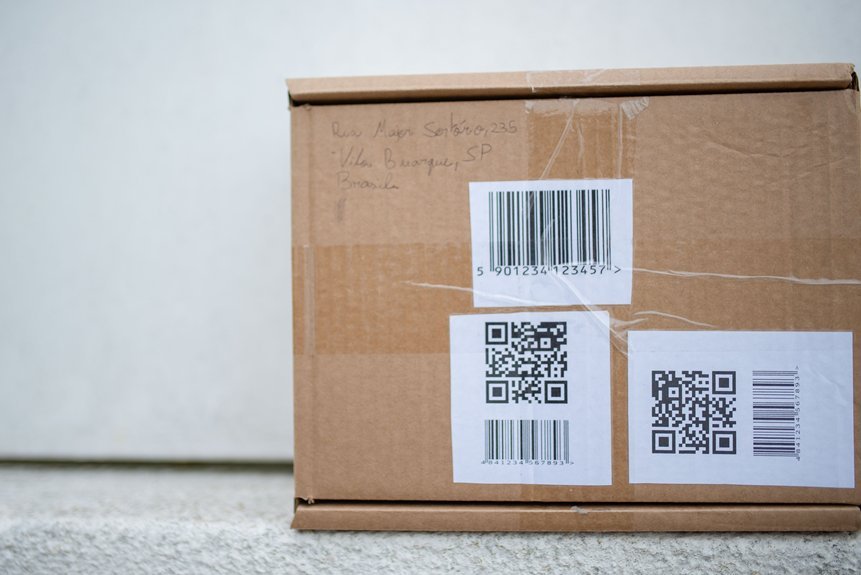
The 3511053621 identifier functions as a stable reference for tagging, retrieval, and interoperability across systems. It supports deterministic workflows, metadata alignment, and auditable decision paths. Practitioners rely on it to enable reproducible results and clear mappings between platforms. This standardization reduces ambiguity and accelerates cross-domain communication. The implications extend beyond basic categorization, inviting further examination of practical deployments and potential pitfalls that emerge in complex environments.
What 3511053621 Is and Why It Matters
What 3511053621 is and why it matters can be defined succinctly as a numeric identifier used to categorize a specific item, process, or dataset within a given domain. It functions as a stable reference for classification, retrieval, and interoperability. A quick primer, it supports metadata alignment.
Practical guide: use consistent tagging, document scope, and ensure traceable mappings across systems.
Everyday Applications You’ll Actually Use
Common everyday applications of 3511053621 translate into practical, readily implementable uses that streamline classification workflows. The material underpins routine tasks with deterministic outcomes, enabling rapid triage, labeling, and auditing. These functions are illustrated by concise case studies, highlighting reliable decision paths and failure modes. Awareness of common pitfalls ensures robust deployment, repeatable results, and continuous improvement across diverse, freedom-oriented environments.
Specialized Tasks That Benefit From 3511053621
Specialized tasks that benefit from 3511053621 leverage its deterministic behavior to handle complex classification scenarios requiring high fidelity and reproducibility.
In such contexts, system designers address insight gaps with rigorous validation, while practitioners anticipate practical pitfalls, including edge-case handling and bias minimization.
The approach emphasizes repeatable outcomes, robust benchmarking, and disciplined parameterization to ensure predictable performance across varied, high-stakes datasets.
Quick Tips to Get Good Results With 3511053621
Effective results with 3511053621 hinge on disciplined practice and clear parameterization; practitioners should adopt a concise, repeatable workflow that emphasizes alignment between task requirements and model capabilities. This guide presents quick tips for achieving good results with 3511053621: define success metrics, prune inputs, constrain prompts, verify outputs, iterate parameters, and document rationale. Consistency and deliberate testing yield reliable, scalable performance.
Frequently Asked Questions
Is 3511053621 Legally Regulated in My Country?
Yes, it is subject to regulation in many jurisdictions; however, the specifics vary. The discussion idea one notes compliance requirements, while discussion idea two highlights licensing prerequisites and enforcement considerations within each country’s legal framework.
Which Industries Most Commonly Use 3511053621?
Industries using 3511053621 span aerospace, automotive, electronics, and medical devices. Major applications include precision components, control systems, and diagnostics. The authoritative assessment notes stringent standards, technical specificity, and a freedom-seeking emphasis on reliability and innovation across sectors.
Are There Safety Concerns With 3511053621?
Safety concerns exist and are mitigated through strict regulatory compliance. The subject requires documented risk assessments, controlled handling procedures, and ongoing monitoring to ensure safety profiles meet applicable standards and protect personnel, operations, and environmental integrity.
How Does 3511053621 Compare to Alternatives?
The comparison shows 3511053621 lags alternatives on efficiency and reliability yet offers distinct compliance considerations and market implications; using alternative benchmarks clarifies performance gaps, guiding informed decisions via rigorous metrics and transparent risk assessment for freedom-seeking stakeholders.
What Are Common Troubleshooting Steps for 3511053621?
Troubleshooting steps for 3511053621 typically include verifying signals, checking connections, and testing with calibrated equipment, followed by systematic isolation of faults. Regulatory status is reviewed concurrently to ensure compliance and safe deployment within applicable jurisdictions.
Conclusion
In sum, 3511053621 proves remarkably indispensable, if one values predictability over innovation. Its rigid taxonomy delivers clean, auditable trails, exactly as advertised, leaving little room for whimsy or error. Practitioners praise the stability while quietly admitting that creativity must bow to deterministic tagging. When chaos threatens data interoperability, the identifier steps in—not to inspire, but to enforce uniformity with ceremonial precision. The irony? Dependence on a numeric anchor makes systems surprisingly resistant to genuine novelty.